
If you own a condominium in California, you’ve likely heard about SB 326, the state law requiring mandatory structural inspections of condo buildings. For some owners and HOA boards, it’s just another compliance item. For others, it has become a major financial and emotional burden that’s forcing difficult decisions.
This guide breaks down what SB 326 is, who it affects, why it’s expensive, and why some condo owners across California are choosing to sell instead of paying for inspections and repairs. Whether you plan to stay or you’re quietly considering your exit, understanding your options matters.
What Is SB 326?
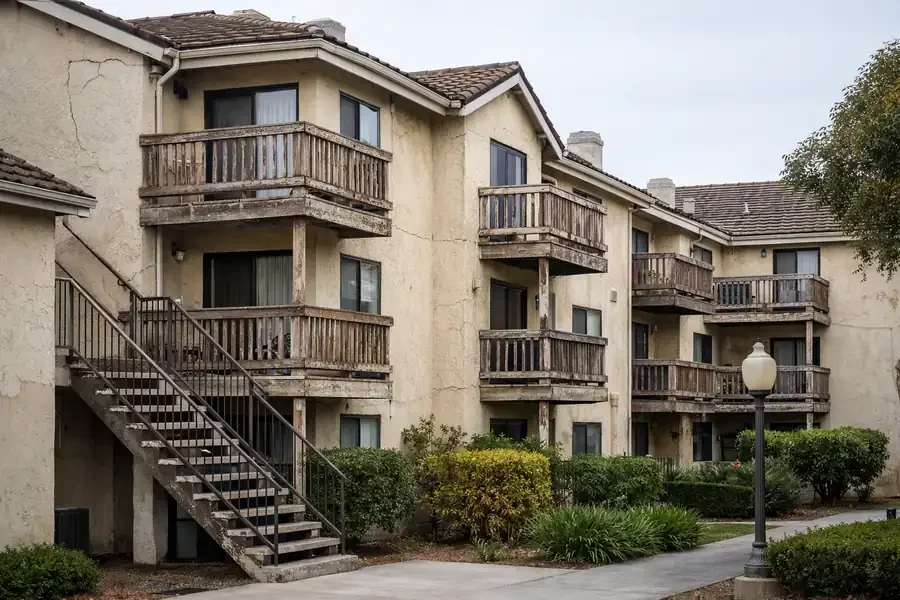
SB 326 is a California law that requires condominium associations to inspect certain exterior elevated elements of their buildings. This includes:
- Balconies
- Decks
- Stairways
- Walkways
- Elevated landings
If these structures are supported by wood framing and are part of a condo complex with three or more units, they fall under the law.
The purpose of SB 326 is safety. The law was created to prevent structural failures by identifying wood rot, water intrusion, and other hidden issues before they become dangerous.
SB 326 applies statewide. It does not matter whether your condo is in a coastal city, the Central Valley, or Southern California. If your HOA owns or maintains exterior elevated elements, compliance is required.
Who SB 326 Affects Most
SB 326 impacts three main groups:
Condominium Owners
Even though inspections are handled by the HOA, owners pay the bill. Inspection costs, repairs, and ongoing maintenance often result in special assessments or higher monthly dues.
HOA Boards
HOA boards are legally responsible for scheduling inspections, hiring licensed professionals, reviewing reports, and ensuring repairs are completed. Failure to comply exposes the HOA to fines and liability.
Buyers and Sellers
SB 326 has changed how condos are bought and sold in California. Buyers, lenders, and title companies now scrutinize HOA compliance closely, and unresolved issues can derail traditional sales.
SB 326 Inspection Deadlines and Requirements
HOAs were required to complete their initial SB 326 inspection by January 1, 2025. After that, inspections must occur every nine years.
The inspection must be completed by a licensed structural engineer or architect. It includes:
- Visual inspection of exterior elevated elements
- Statistical sampling of units
- Evaluation of wood framing and waterproofing
- Written reports identifying safety concerns and remaining useful life
If unsafe conditions are found, repairs must be addressed immediately. Even non-emergency issues often require long-term repair plans and funding.
For owners, this is where the real impact begins.
The Real Cost of SB 326 for Condo Owners
SB 326 compliance is rarely inexpensive.
Inspection Costs
Even before repairs, inspections alone can cost thousands of dollars depending on the size of the complex.
Repair Costs
If damage is found, repairs can range from minor to extremely extensive. Wood rot, structural reinforcement, waterproofing, and reconstruction can add up quickly.
Special Assessments
Many HOAs do not have adequate reserves. As a result, owners are often hit with special assessments that can range from a few thousand dollars to tens of thousands per unit.
For owners on fixed incomes, retirees, or those already stretched financially, these assessments can be overwhelming.
This is one of the main reasons condo owners begin searching for information about selling a condo as-is or selling a condo fast due to HOA issues.
How SB 326 Is Affecting Condo Sales in California
SB 326 has quietly reshaped the condo market across the state.
Lender Hesitation
Mortgage lenders are increasingly cautious. If an HOA has not completed inspections or has unresolved repair obligations, buyers may struggle to get financing approved.
Deals Falling Apart
Many condo sales fall out of escrow once HOA documents reveal upcoming assessments or compliance gaps. Buyers walk away. Sellers lose time and momentum.
Lower Market Value
Even when buyers are willing to proceed, they often demand price reductions to offset future repair costs. This puts sellers at a disadvantage.
Because of this, many owners begin looking into alternatives to listing with an agent, especially when speed and certainty matter.
SB 326 Across California: Regional Impact
SB 326 is a statewide issue, but how it affects owners varies by region.
Northern California
In areas like San Francisco, Oakland, San Jose, and Sacramento, many condo buildings are older and more likely to have wood-framed balconies. Coastal moisture and age increase the likelihood of expensive repairs.
Owners in Northern California frequently search for options like selling a condo in San Francisco without repairs or selling a condo fast in Sacramento due to HOA assessments.
Central California
Cities such as Fresno, Bakersfield, Modesto, and Stockton often have more affordable condos. That makes large assessments disproportionately painful. A $15,000 repair bill on a lower-priced unit can eliminate years of equity.
This is where sellers often explore selling a condo for cash in the Central Valley to avoid sinking money into repairs they may never recover.
Southern California
Los Angeles, Orange County, San Diego, Riverside, and surrounding areas have some of the highest concentrations of condos in the state. Coastal exposure accelerates wood deterioration, and large complexes often result in massive total repair costs.
Owners here frequently face difficult choices and begin looking into selling a condo fast in Los Angeles, selling a condo in Orange County as-is, or cash buyers for San Diego condos.
Options for Condo Owners Facing SB 326
There is no one-size-fits-all solution. Owners generally have three paths:
1. Stay and Pay
Some owners choose to pay assessments, endure construction, and stay put. This makes sense if the condo is a long-term home and the owner can comfortably afford the costs.
2. Rent It Out
In some cases, owners consider renting the unit to offset costs. However, HOA restrictions, rising dues, and market conditions often make this option less attractive than expected.
3. Sell the Condo
For many owners, selling becomes the most practical solution, especially when:
- Assessments are unaffordable
- Repairs are ongoing or uncertain
- A sale is needed quickly
- Traditional buyers are backing out
This is where selling directly to a cash condo buyer becomes relevant.
Why Some Owners Choose a Fast Cash Sale
A fast cash sale is not right for everyone, but it can provide relief for owners facing SB 326 pressure.
Speed
Cash buyers can often close in days or weeks, not months. This matters when assessments or fines are looming.
No Repairs Required
Condos can be sold as-is, even if inspections are incomplete or repairs are pending.
No Financing Risk
There is no lender approval needed, which avoids deal failures tied to HOA compliance issues.
Certainty
Owners know exactly when the sale will close and how much they will receive.
Many owners researching SB 326 eventually look into how to sell a condo fast in California, cash buyers for condos, or selling a condo with HOA problems. These searches are driven by the need for certainty, not convenience.
Planning Ahead Is the Key
SB 326 is not temporary. It is now a permanent part of condo ownership in California.
If you own a condo, the most important step is staying informed:
- Ask your HOA about inspection status
- Review reserve studies
- Understand upcoming assessments
- Consider your long-term financial comfort
For some, staying makes sense. For others, selling before costs escalate provides peace of mind.
There is no wrong choice, only the choice that fits your situation.
Final Thoughts
SB 326 was designed to protect lives, but it has also created serious financial challenges for condo owners across California. From San Francisco to San Diego, from Sacramento to Fresno, owners are navigating inspections, assessments, and uncertainty.
If you’re feeling overwhelmed, you’re not alone. Whether you choose to stay and comply or explore a fast sale option, understanding SB 326 puts you back in control.