When people think of historic Sacramento, their minds usually jump straight to Old Sacramento Waterfront with its wooden boardwalks and Gold Rush-era storefronts. But when it comes to Sacramento’s oldest surviving residential neighborhood, that title belongs to Alkali Flat.
Located directly north of Downtown Sacramento (bordered roughly by 7th Street, 12th Street, H Street, and the railyards), Alkali Flat has been a cornerstone of the city since the 1850s.
Here is what makes Alkali Flat unique, how it got its distinct name, and what homeowners in Sacramento’s historic districts need to know about property values, maintenance, and selling an older home.
How Alkali Flat Got Its Name
After a massive fire swept through Sacramento in 1852, wealthy residents and prominent political figures—including California’s fourth governor, J. Neely Johnson—began building grand homes just north of the central business district.
The area was originally a low-lying lakebed. Before the American River was re-channeled and levees were built, winter and spring floods regularly submerged the area. When the floodwaters evaporated during warm weather, they left behind a chalky, white salt residue across the dirt streets—hence the name Alkali Flat.
Key Highlights of Alkali Flat History
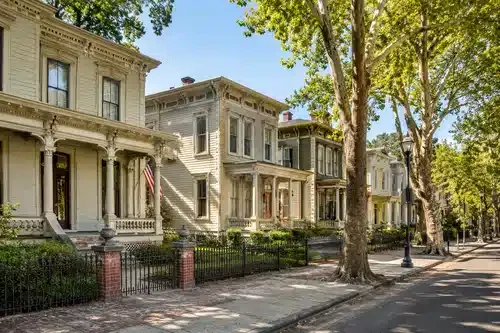
- Gold Rush Architecture: Alkali Flat features some of the finest examples of 19th-century Italianate, Greek Revival, and Victorian homes in Northern California.
- Shift to Working Class & Industry: By the late 1800s and early 1900s, railyards and mills expanded nearby. Wealthier families moved further east, and the neighborhood evolved into a vibrant community for railroad workers and immigrant families.
- Cultural Legacy: In the late 1960s, Alkali Flat became a hub for the Royal Chicano Air Force (RCAF), an influential artist collective that shaped Sacramento’s public art and community movement.
- National Register of Historic Places: In 1984, three distinct sections of Alkali Flat were officially added to the National Register of Historic Places to protect its architectural legacy.
The Reality of Owning an Older Home in Sacramento
While historic homes in neighborhoods like Alkali Flat, Mansion Flats, Boulevard Park, and Midtown carry unmatched charm, they also present unique challenges for homeowners:
- Historic Preservation Rules: Renovation in historic districts often requires strict city approval, specialized contractors, and period-accurate materials, driving up repair costs.
- Deferred Maintenance: Houses built in the late 1800s or early 1900s frequently face foundation issues, outdated knob-and-tube wiring, galvanized plumbing, and aging roofs.
- Inherited Property Stress: Many older homes in Downtown and Midtown Sacramento are passed down through families, leaving heirs with a house that needs tens of thousands of dollars in updates before it can pass a traditional bank inspection.
Frequently Asked Questions About Historic Sacramento Real Estate
What is the difference between Old Sacramento and Alkali Flat?
Old Sacramento (the Old Sacramento Waterfront) was the city’s historic commercial district built during the Gold Rush along the Sacramento River. Alkali Flat, located just a few blocks northeast, developed as Sacramento’s first residential neighborhood where business owners and residents built their homes.
Are there strict rules for remodeling a home in Alkali Flat?
Yes. Because parts of Alkali Flat are designated historic districts on both city and national registries, exterior alterations often require review by the Sacramento Preservation Commission. Work must comply with the city’s Historic Overlay Zone guidelines to preserve architectural integrity.
What are the most common repair issues in older Sacramento homes?
Homes built prior to 1940 commonly require upgrades to legacy electrical systems (such as knob-and-tube wiring), repiping to replace corroded galvanized iron pipes, foundation repairs due to soil settling, and hazardous material abatement for lead paint or asbestos.
Can I sell a historic Sacramento home as-is without fixing code violations?
Yes. Traditional homebuyers relying on mortgage loans may struggle to purchase a home with major code violations or structural issues because lenders won’t approve financing. However, off-market real estate specialists like R&H Distressed Properties acquire homes directly in as-is condition—taking on all required repairs, historic preservation compliance, and back taxes so owners don’t have to put out-of-pocket money into an older building.