
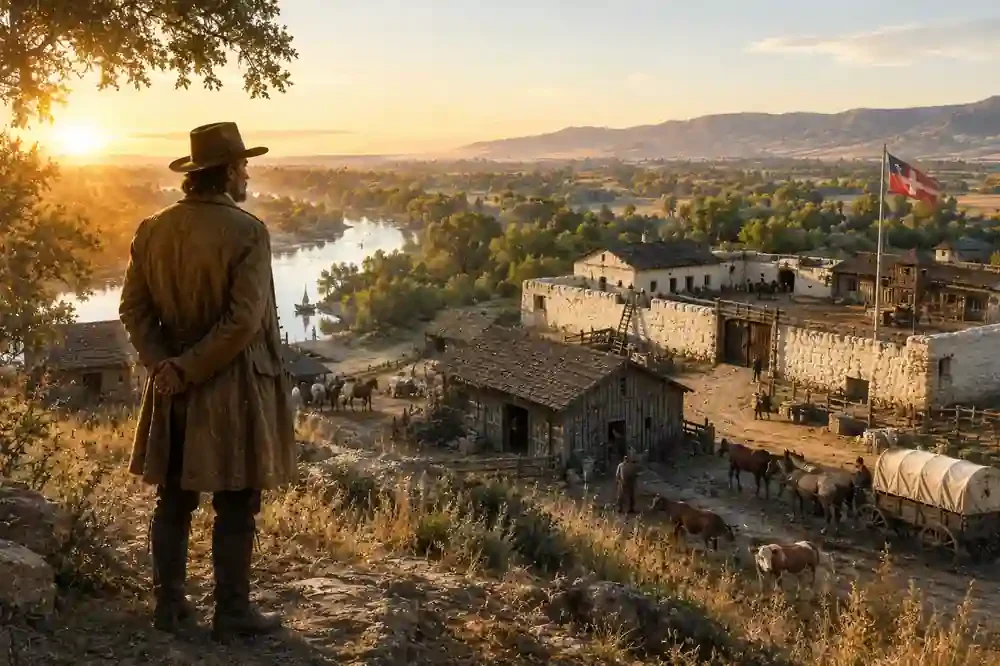
Before it was incorporated as the City of Sacramento in 1850, the area was originally called Nueva Helvetia (New Switzerland) by European settlers, while the rivers and surrounding region were named Sacramento by Spanish explorers. Long before European colonization, the land was home to indigenous peoples who knew the area by localized names, including Pusúne.
Understanding what Sacramento was originally called requires looking at four distinct chapters in the region’s history: its Indigenous heritage, Spanish exploration, Swiss settlement, and the booming riverbank landing known as Sutter’s Embarcadero.
1. The Original Indigenous Names: Nisenan & Plains Miwok
For thousands of years before European contact, the confluence of the Sacramento and American Rivers was inhabited by the Nisenan (Southern Maidu) and Plains Miwok Native American tribes.
- Pusúne: One of the prominent Nisenan village sites located near the junction of the American and Sacramento Rivers was known as Pusúne (or Pusune).
- The native inhabitants called the lands and rivers by names reflecting their geographic surroundings long before any European borders or city names existed.
2. The Spanish Origin: Where the Name “Sacramento” Came From
In 1808, Spanish explorer Gabriel Moraga surveyed the Central Valley while exploring on behalf of the Spanish Crown.
Upon sighting the dramatic, broad river (today’s Sacramento River), Moraga named it El Río de los Santísimo Sacramento—translating to “The River of the Most Holy Sacrament” in reference to the Catholic Holy Eucharist. Over time, the name was shortened simply to the Sacramento River, which later gave the city its official name.
3. The Pioneer Era: Nueva Helvetia & Sutter’s Fort (1839)
When European-American settlement began in earnest, the actual community preceding modern Sacramento was named Nueva Helvetia (New Switzerland).
- John Sutter’s Grant: In 1839, Swiss immigrant John Sutter arrived in the Mexican territory of Alta California. He received a 48,000-acre land grant from Mexican Governor Juan Bautista Alvarado.
- Nueva Helvetia: Sutter named his vast colony Nueva Helvetia in honor of his homeland (Helvetia being the Latin name for Switzerland).
- Sutter’s Fort: Sutter constructed a fortified adobe compound two miles inland from the river that became known as Sutter’s Fort, serving as the agricultural and commercial center of Nueva Helvetia.
4. The Transition: Sutter’s Embarcadero to Sacramento (1848–1850)
As the 1849 California Gold Rush took off following the discovery of gold at Sutter’s Mill, the flood of arriving fortune seekers transformed the area into a booming commercial tent city.
The Role of Sutter’s Embarcadero
To connect his inland fort with water trade routes, John Sutter built a small boat landing along the riverbank. Because California was under Mexican rule at the time, this river landing was called Sutter’s Embarcadero (embarcadero being Spanish for landing place or pier).
When Gold Rush prospectors arrived by boat from San Francisco, merchants set up supply tents directly on the riverbank at Sutter’s Embarcadero to sell tools to miners as soon as they stepped ashore.
From Sutterville to Sacramento City
- Sutterville: In 1846, Sutter and his associate John Lansford Hastings laid out a townsite south of the fort called Sutterville, hoping it would become the primary city.
- Sacramento City: John Sutter’s son, John A. Sutter Jr., recognized that prospectors preferred landing directly at Sutter’s Embarcadero. In late 1848, Sutter Jr. hired army engineer William H. Warner to survey a city grid directly around the embarcadero, officially naming it Sacramento City.
- Incorporation (1850): On February 27, 1850, the settlement around Sutter’s Embarcadero officially incorporated as the City of Sacramento, becoming California’s first incorporated city. Today, this historic landing site is known as the Old Sacramento Waterfront.
Summary of Name Changes
| Era / Year | Name | Origin / Significance |
| Pre-1830s | Pusúne (and local village names) | Indigenous Nisenan village located near the river confluence. |
| 1808 | El Río del Santísimo Sacramento | Spanish explorer Gabriel Moraga names the river; later shortened to Sacramento. |
| 1839 | Nueva Helvetia | John Sutter’s 48,000-acre colony, Latin for “New Switzerland.” |
| 1840s | Sutter’s Embarcadero | Spanish term for the riverboat landing that later became Old Sacramento. |
| 1846 | Sutterville | An early planned settlement just south of Sutter’s Fort. |
| 1848–1850 | Sacramento | Platted by John Sutter Jr. along the riverfront embarcadero; incorporated in 1850. |
Preserving Historical Properties in Modern Sacramento
As Sacramento evolved from a 19th-century river landing into California’s vibrant capital, many of its surrounding neighborhoods grew around aging homes and historical architecture.
Maintaining older properties across the Sacramento region can present unique maintenance or structural challenges for homeowners. Established cash buyers like R&H Distressed Properties help property owners transition out of historic, outdated, or distressed homes without requiring costly renovations, out-of-pocket repairs, or agent fees.
We Buy Houses Citrus Heights CA, We Buy Houses Fair Oaks CA, We Buy Houses Carmichael CA, We Buy Houses Elk Grove CA, We Buy Houses Orangevale CA, We Buy Houses North Highlands CA
Frequently Asked Questions
What does the word Sacramento mean?
Sacramento is Spanish for “Sacrament,” specifically referring to the Santísimo Sacramento (Most Holy Sacrament/Eucharist) in Catholic Christian tradition.
What was Sutter’s Embarcadero?
Sutter’s Embarcadero was the riverboat landing built along the Sacramento River to transport goods to Sutter’s Fort. The commercial area that grew around this landing became the grid for modern Sacramento.
Who actually named the city of Sacramento?
While Spanish explorer Gabriel Moraga named the river in 1808, John A. Sutter Jr. officially named the town Sacramento when he hired surveyors to lay out the city grid along the river in 1848.
What was John Sutter’s settlement called?
John Sutter called his entire colony Nueva Helvetia (New Switzerland). The fortified central hub within the colony was known as Sutter’s Fort.